

The Friendship at the Heart of Modern Studio Pottery
Leach & Hamada
The Beauty in Everyday Objects

|
There is something about the Potters Bernard Leach and Shoji Hamada that I find incredibly moving.
Partly it is the work itself, the simplicity and lack of fuss and the sense that nothing is there unless it needs to be, something I realise I'm drawn to in the designers I admire most. But I think what I love just as much is their friendship, and the fact that so much of what they went on to achieve seems to have grown out of a shared way of looking at the world.

|
They believed in making things well, with honest materials, respecting the hand of the maker and finding beauty in objects that were part of the everyday. The sort of things that become part of the background of a life, but somehow make that life a little better.
 |
|
|
|
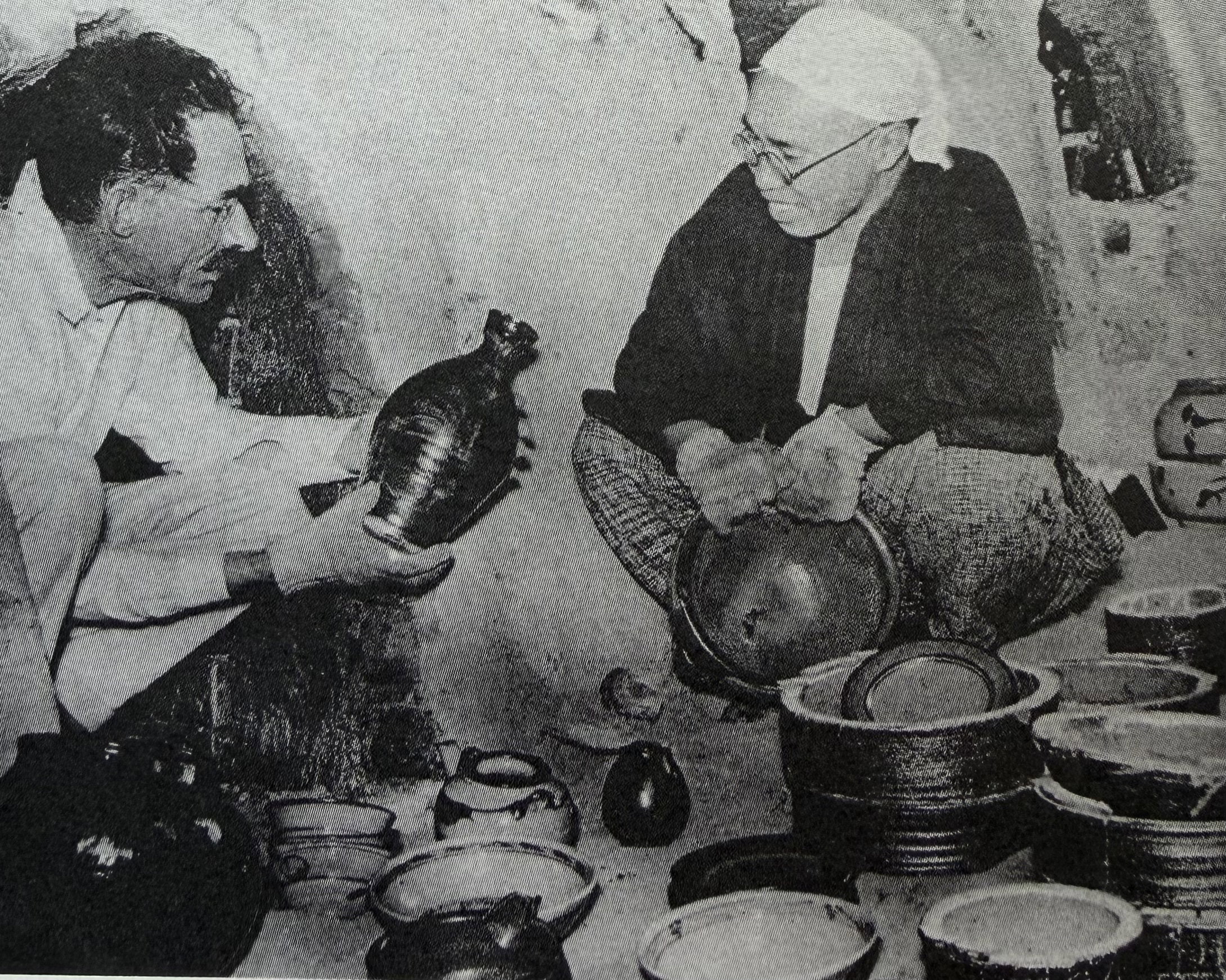
| Leach and Hamada met in Japan in the early twentieth century and formed a friendship that would last for the rest of their lives. When Leach returned to England in 1920, Hamada came with him, and together they travelled to St Ives and established what became the Leach Pottery. |
|
|
 |
And yet the ideas that came out of that pottery would have an extraordinary influence on twentieth century ceramics.

|
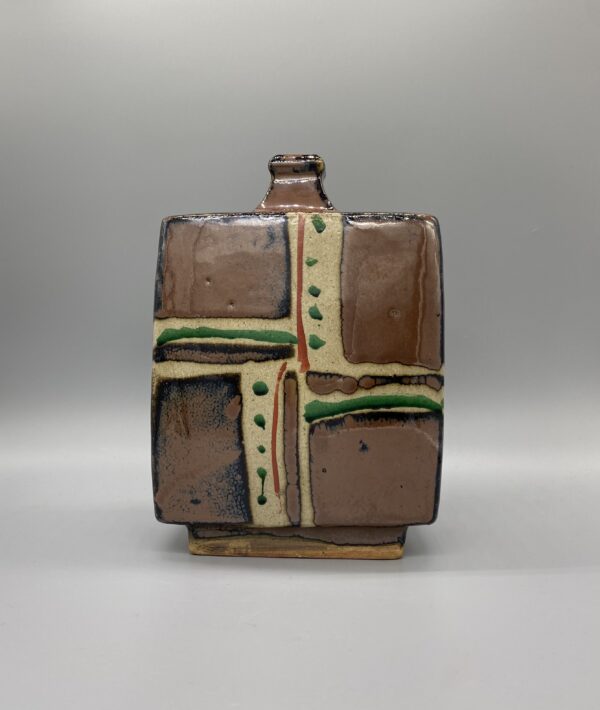
For both men, making was tied to a wider philosophy about how things should be made and how people might live with them. Through Hamada and their close friend Soetsu Yanagi, Leach became closely connected with the Japanese Mingei movement, which celebrated the beauty of ordinary, useful things made by hand. The ideal was simplicity and humility. A pot wasn’t supposed to announce itself. Its beauty could come from the clay and glaze, the touch of the hand that made it and the fact that it did its job well.
|

Leach remained in St Ives, where the pottery became one of the most influential centres of studio ceramics in Britain. He wrote, taught and travelled widely, introducing generations of makers to ideas drawn from both Eastern and Western craft traditions.

|
Through all of this, the two men remained close. They visited one another, travelled and lectured together and continued the conversation they had begun decades earlier.
And although these ideas began long before the Second World War, they seem to have found an especially receptive audience afterwards. Across architecture, furniture, ceramics and textiles, there was a wider move towards simpler forms, natural materials and objects that were useful, durable and quietly beautiful. Perhaps after years of upheaval and scarcity, there was something meaningful in making ordinary life feel considered again. Not luxurious in an obvious sense. Just better.
|
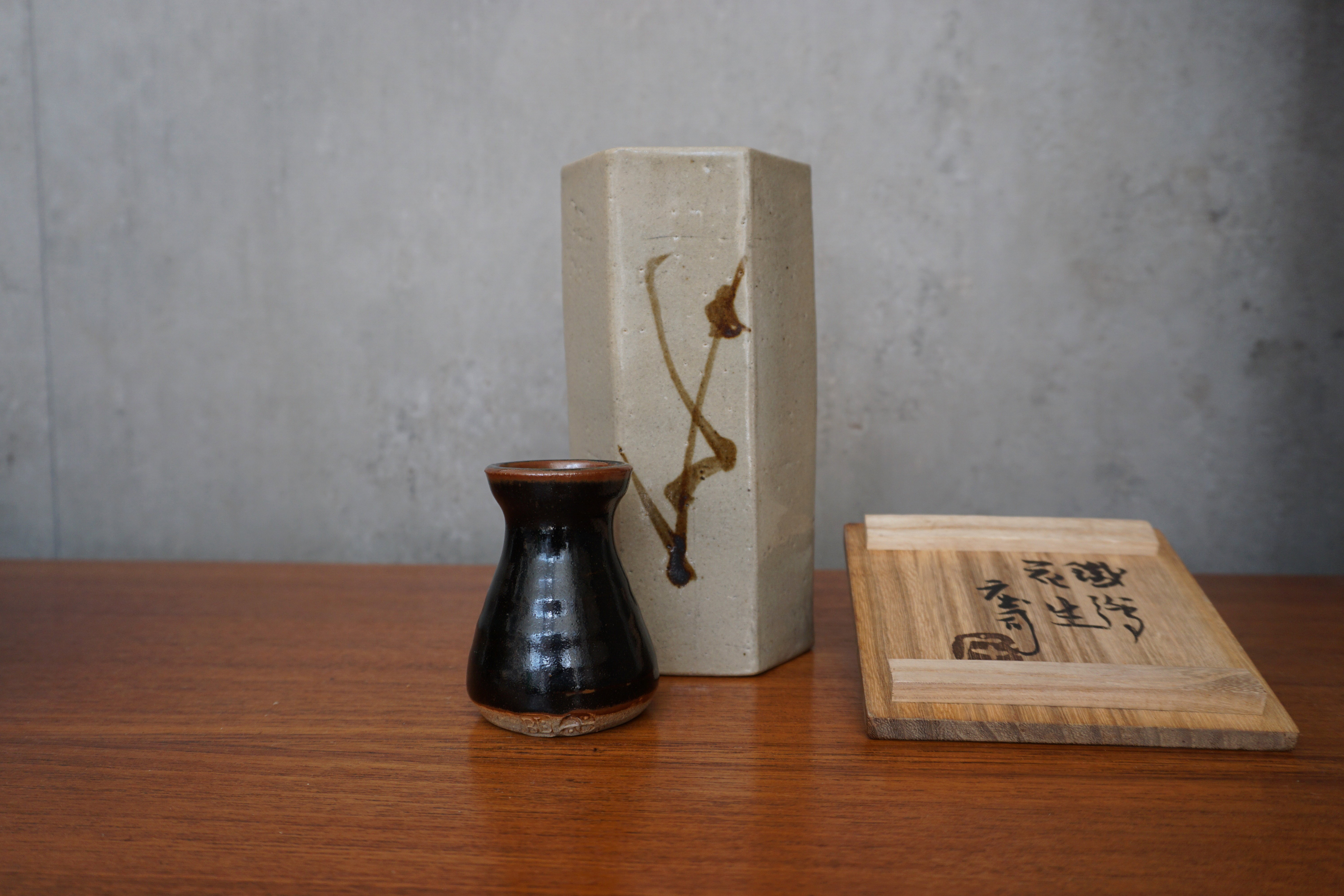
We have recently found two small works by Leach and Hamada for the shop, both dating from around the 1960s.

|
The Hamada is a hexagonal stoneware vase with a beautifully painted branch across three faces, still accompanied by its original signed wooden presentation box.

|
The Leach is much smaller, an 8.5cm stem vase covered in a deep, almost black tenmoku glaze, impressed beneath with both his personal seal and the Leach Pottery mark.
Neither is grand. That is probably what I like about them most. They are modest objects made by two enormously important men, and they carry with them a philosophy that still feels completely relevant, that the things we live with every day deserve thought, skill and care and that beauty does not have to shout.
Both pieces are here in then shop, so do come in for a look if you're passing, I'd love to show them to you.

|


