

The women who helped save modern art
Peggy Guggenheim In London

|
I feel that many of you who enjoy what we do at A fold of chairs probably share a similar taste in art and design to me, so I think you’ll really enjoy the Peggy Guggenheim exhibition coming to the Royal Academy in November. We’ve just been lucky enough to see it in Venice, and it was one of the loveliest collections of twentieth century art I’ve seen in a while. The exhibition brings together work by some of my favourite artists, including Barbara Hepworth, Henry Moore, Piet Mondrian, Wassily Kandinsky and Sophie Taeuber-Arp. But beyond the artwork itself, I found Peggy Guggenheim’s personal story fascinating.

|
Guggenheim Jeune Kandinsky Exhibition Invitation
Her determination to collect, protect and champion modern art, particularly during the years surrounding the Second World War, was quite extraordinary.
In January 1938, Peggy Guggenheim opened her first gallery, Guggenheim Jeune, on Cork Street in London. At the time, abstract and Surrealist art were still relatively unfamiliar to much of the British public. Many of the artists she supported were experimenting with ideas that challenged traditional expectations of what art should be.

|
Equilibre (1932), Sophie Taeuber-Arp
Over just eighteen months, Peggy organised more than twenty exhibitions, including Kandinsky’s first solo exhibition in London and an exhibition dedicated to contemporary sculpture that proved particularly controversial.
Her gallery became an important meeting place for artists, writers and thinkers, helping introduce European modernism to a British audience. The exhibition reunites many of the works shown during this remarkable period, alongside photographs, correspondence and archival material documenting the beginnings of her career.

|
Courbe Dominante (1936) Wasily Kandinsky
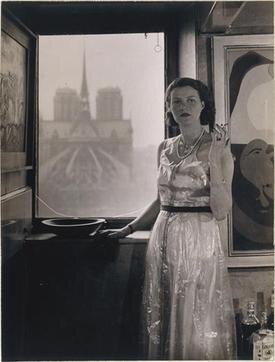
When Guggenheim Jeune closed in 1939, Peggy began planning something even more ambitious - a museum of modern art. She moved to Paris and started building a collection that would represent the most important artistic movements of the twentieth century. Her ambition was extraordinary. She famously adopted the motto “Buy a picture a day.” And, she largely managed it.
|
Peggy in Paris
During 1939 and 1940, as Europe descended into war, Peggy continued visiting artists’ studios and buying paintings and sculptures. She acquired works by Georges Braque, Salvador Dalí, Piet Mondrian, Robert Delaunay and Francis Picabia, among others. And as German troops approached Paris, she acquired Constantin Brancusi’s Bird in Space, now considered one of the great works of modern sculpture.

|
Bird in Space (1928) Constantin Brancusi
Perhaps the most extraordinary part of Peggy’s story is what happened next.
As the German army advanced across Europe in 1940, her growing collection was in serious danger. The Nazis had condemned much modern art as degenerate, confiscating works from German museums and persecuting artists whose work challenged their ideology.
Peggy approached the Louvre, hoping the museum would agree to safeguard her collection during the war, but they refused considering the works insufficiently important to warrant protection. It’s an astonishing decision to look back on today, particularly when you consider the artists represented in her collection.

|
Sophie Taeuber-Arp
Undeterred, Peggy arranged for the artworks to be packed into crates and shipped across the Atlantic to New York. The artworks were declared as ordinary household goods, with the Guggenheim family name replaced on the shipping documents to avoid drawing attention to her Jewish identity. Inside those crates were paintings and sculptures that would become some of the most important works of twentieth century art.

|
Cossacks (1910-11) Wassily Kandinsky
Peggy also became involved in efforts to help endangered artists escape, working with the American journalist Varian Fry and the Emergency Rescue Committee, which organised the evacuation of artists, writers and intellectuals from Nazi controlled Europe. Among those she helped was the German Surrealist Max Ernst, who had been detained in France and was in danger because of his artistic associations and opposition to the Nazi regime.
|
|
Max Ernst & Peggy Guggenheim
Ernst eventually escaped to America, where he and Peggy married in 1941.
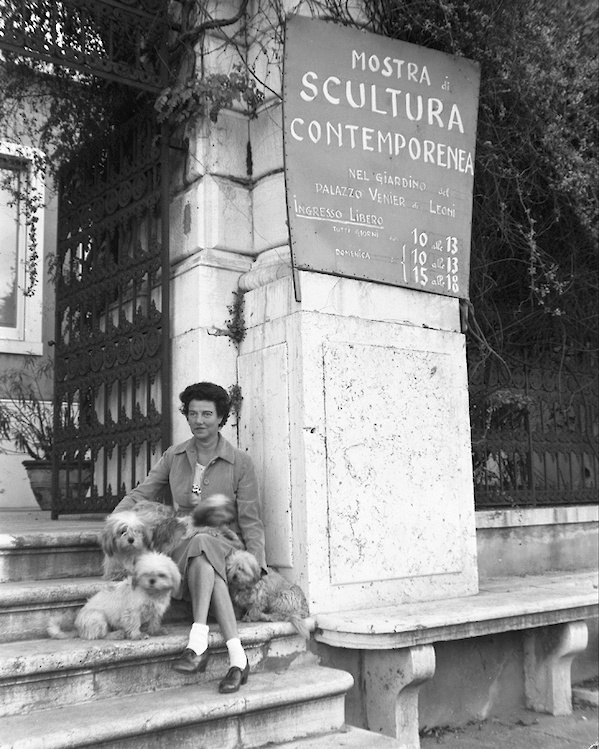
And In 1949, Peggy purchased Palazzo Venier dei Leoni, an unfinished eighteenth century palazzo overlooking Venice’s Grand Canal.
|
Peggy & her dogs outside Palazzo Venier dei Leoni
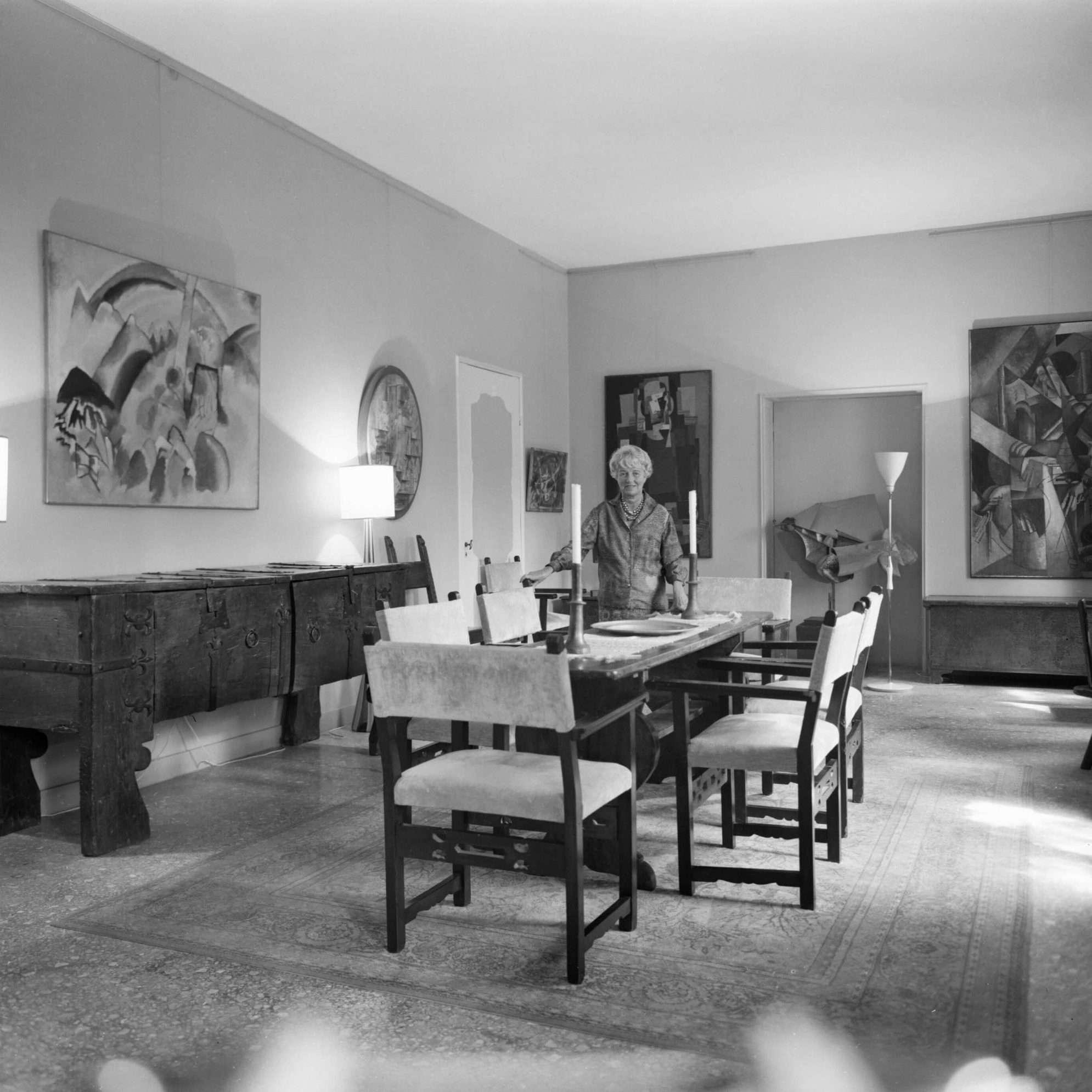
It became her home for the remaining thirty years of her life. Surrounded by paintings, sculptures and an ever changing collection of artists and friends, she lived among the works she had spent decades acquiring.
|
Peggy inside Palazzo Venier dei Leoni\
Today, the palazzo houses the Peggy Guggenheim Collection, and it was here that we visited the exhibition.

|
Stele for Millares (Estela a Millares) by Eduardo Chilida (1972) in the garden of Palazzo Venier dei Leoni
Today, we recognise the importance of preserving these objects, not just because they are beautiful or well made, but because they tell us something about the period in which they were created. What I found most inspiring about Peggy Guggenheim was that she was prepared to trust her judgement and champion the artists she believed in, even when their work was dismissed by established institutions. She helped artists continue their careers, protected their work during one of the most destructive periods in European history and ultimately ensured that future generations would have the opportunity to experience it. And I think that’s an extraordinary legacy.

|
Single Form (1961) Barbara Hepworth
The Royal Academy exhibition runs from 21 November 2026 to 14 March 2027. If your taste overlaps with mine, I'd definitely pay it a visit.
Find out more at the Royal Academy.
|
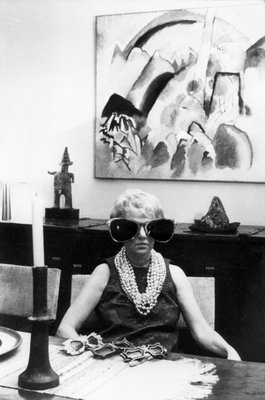
My favourite photo of Peggy Guggenheim
- Caroline


