

Framed Oil painting by Anthony Curtis - Arctic Race 1963/64 (UK)
Framed Oil painting by Anthony Curtis - Arctic Race 1963/64 (UK)
“Arctic Race”
1963-64
Oil on board
Framed in a sapele wood surround
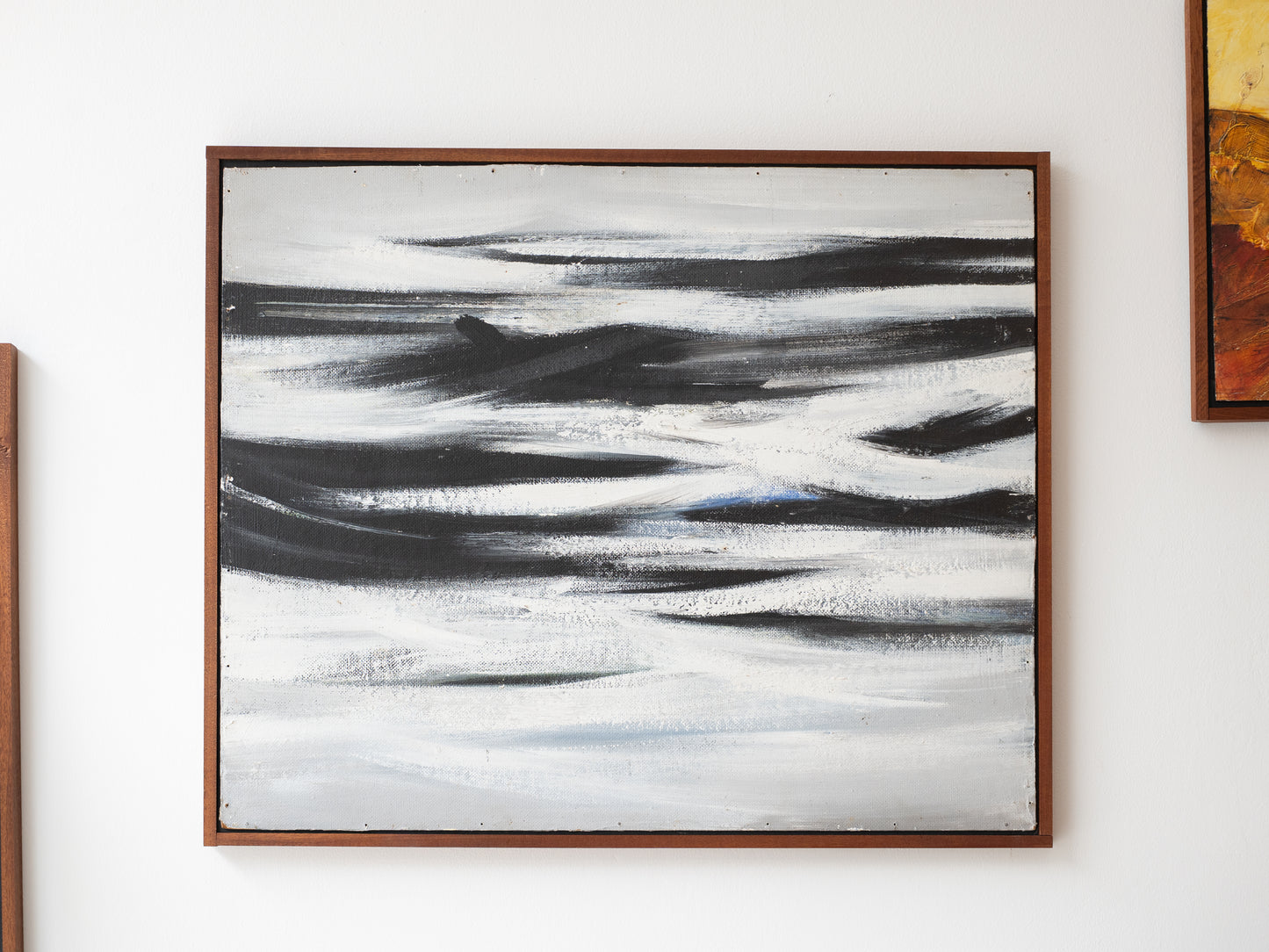
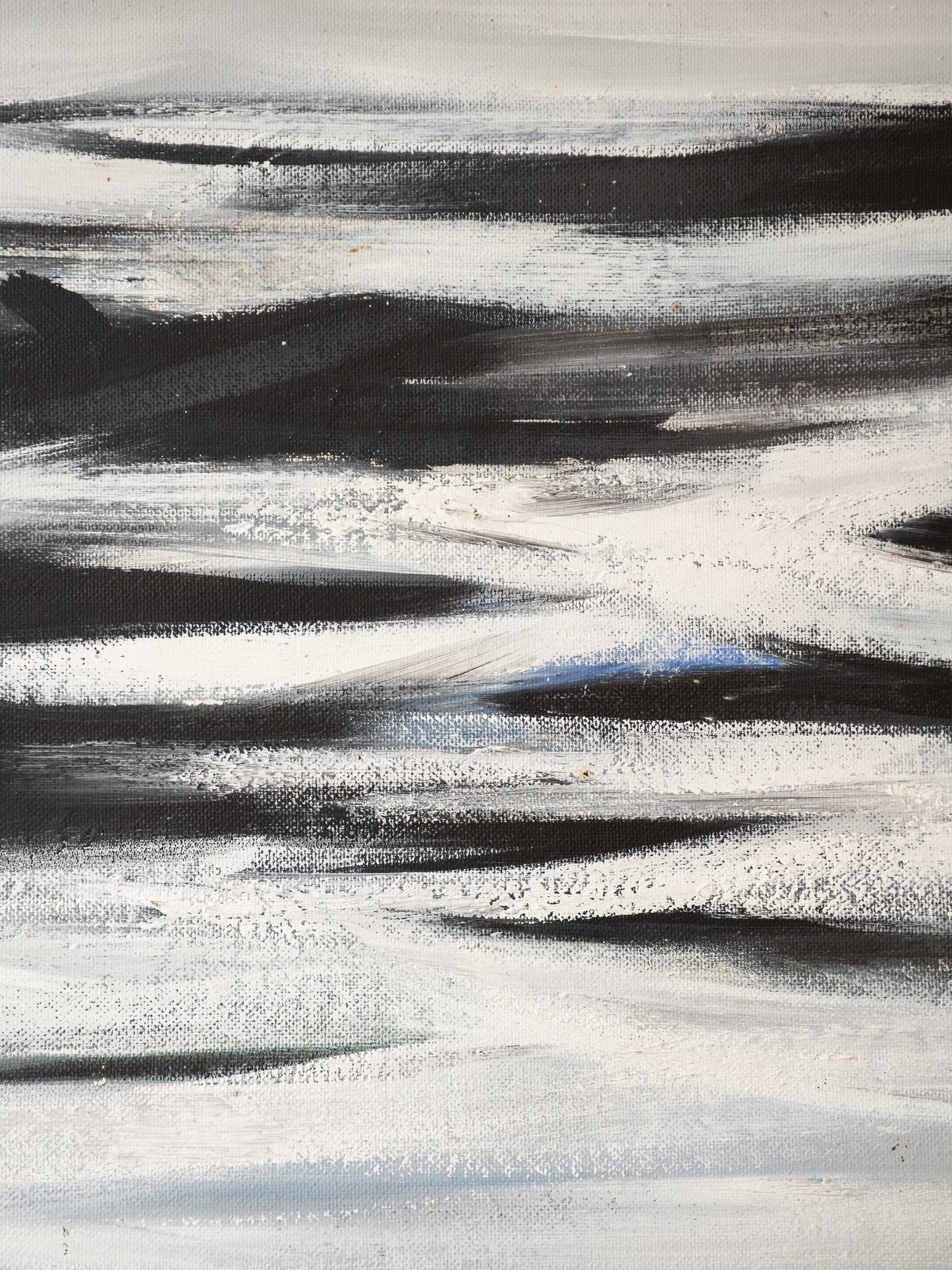
This abstract composition by British artist Anthony Curtis (1928-2018) dates from 1963-64 and is titled Arctic Race, as recorded on the reverse of the board. Painted in oil, the work is built from sweeping horizontal gestures of black and grey across a pale ground, creating a sense of movement and shifting light. The brushwork is energetic yet controlled, suggesting landscape, weather and motion without settling into a literal depiction.
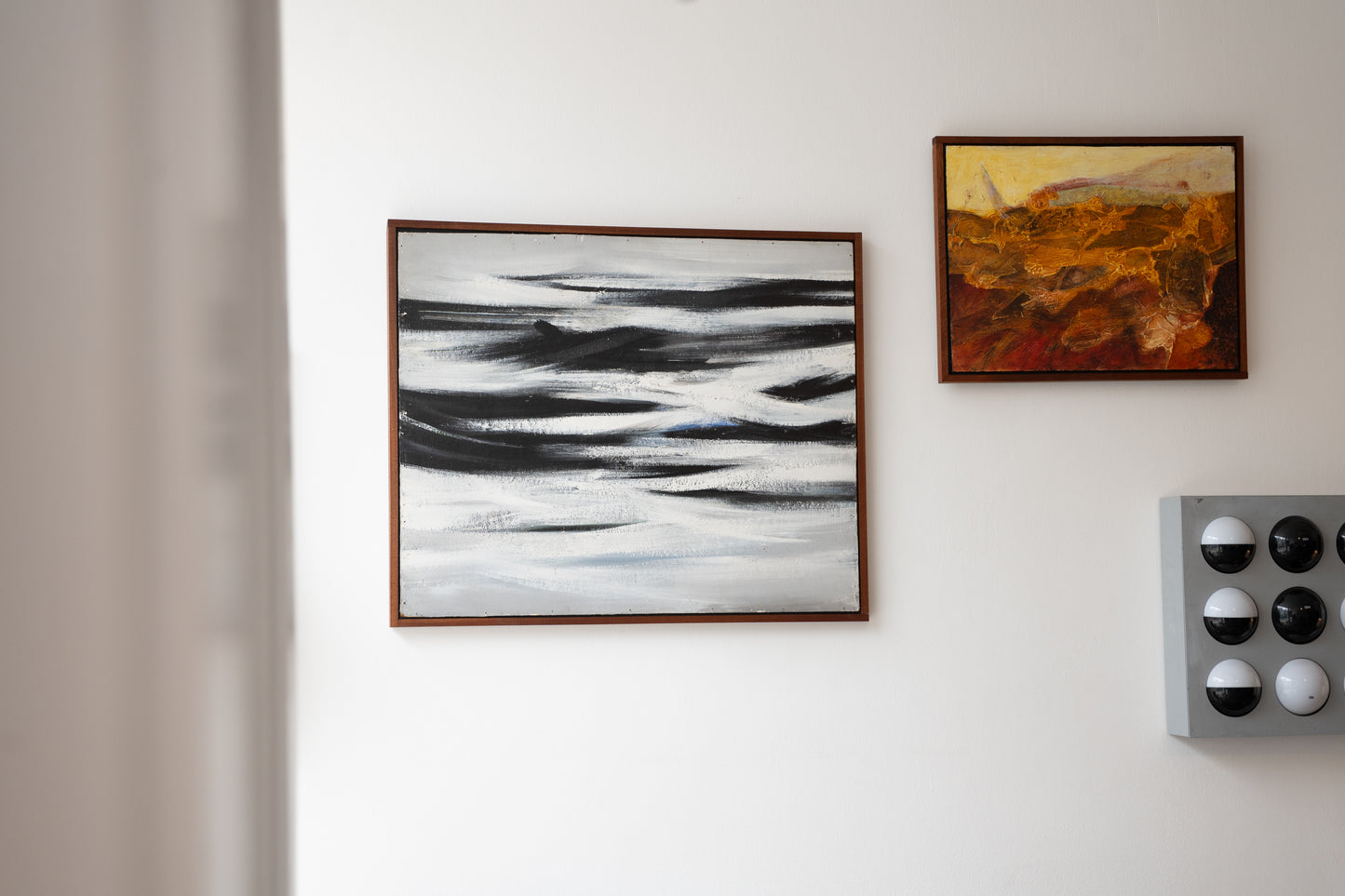
The painting is executed on board and has been newly framed in a simple sapele wood surround, chosen to complement the restrained palette while keeping the focus on the painting itself.
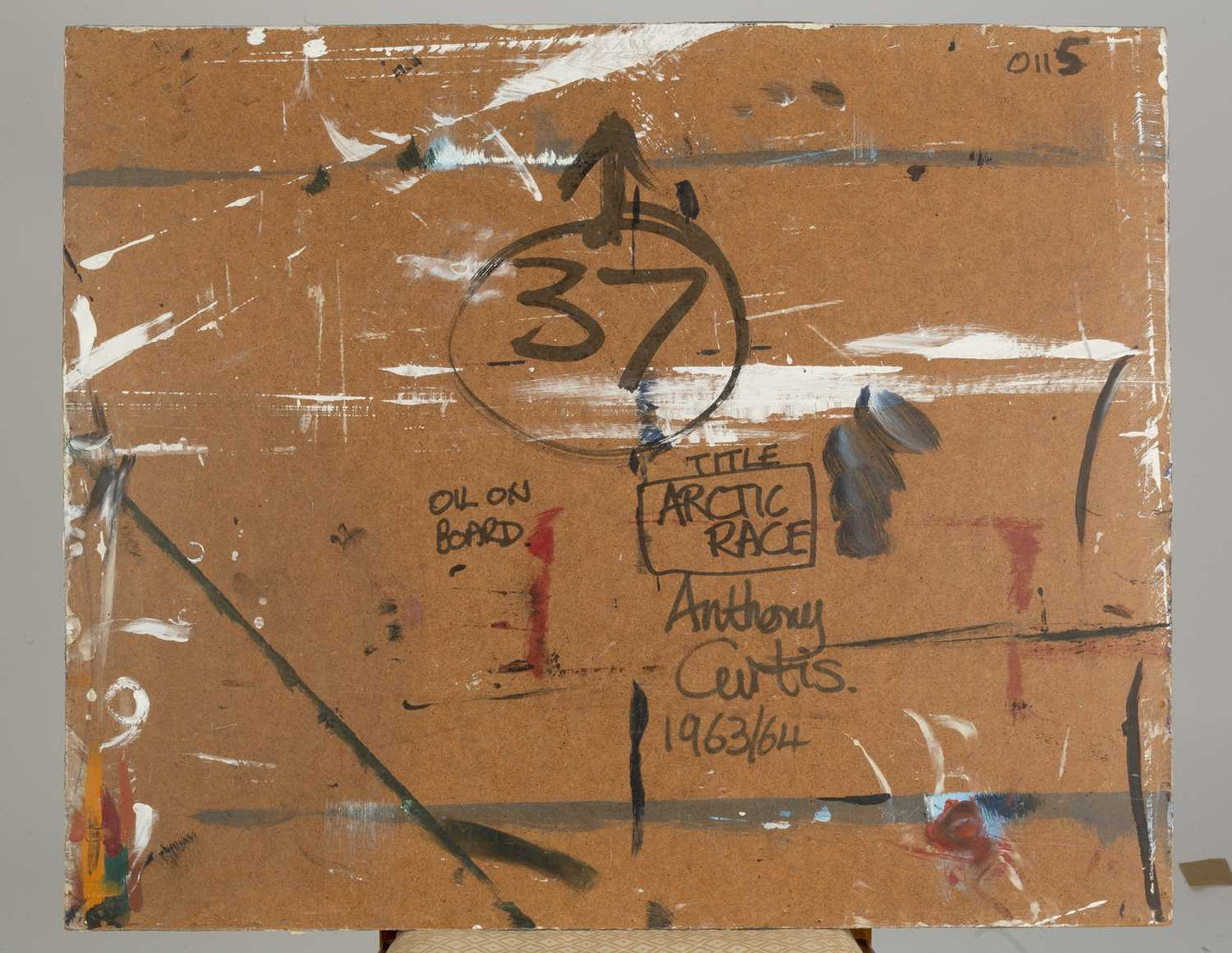
One of the most interesting aspects of Curtis’s work is the way he documented his paintings directly on the reverse. The back of this piece includes handwritten notes by the artist recording the title (Arctic Race), date (1963/64), medium (“oil on board”) and an inventory number, alongside studio marks and paint traces from the period. These inscriptions provide a rare glimpse into Curtis’s working process and the systematic way he catalogued his paintings as they left the studio.
About the Artist
Anthony Ewart Curtis was born in Wakefield, Yorkshire, in 1928. He studied at Loughborough College (1948-50) and then at the Bath Academy of Art at Corsham, one of the most important centres of post-war British art. During this period he was taught by several key figures associated with the St Ives School, including Terry Frost, Bryan Wynter, Peter Lanyon and Kenneth Armitage, artists whose influence can be felt in Curtis’s interest in abstraction, landscape and expressive mark-making.
Curtis’s work gained early recognition when he exhibited in the Daily Express Young Artists’ Exhibition in 1957, where he was also named among Jack Beddington’s “Young Artists of Promise.” By the end of the decade he was holding solo exhibitions at the Bear Lane Gallery in Oxford.
Throughout the late 1950s and 1960s Curtis travelled frequently to Cornwall, working and painting alongside artists connected to the St Ives movement. The work from this period often explores landscape in a highly abstracted form, using gesture and colour to convey atmosphere and movement rather than literal scenery.
Although primarily known as a painter, Curtis later worked in ceramics during the 1960s and 70s, expanding his exploration of form and surface across different materials.
Today his paintings from the 1950s and 60s are particularly sought after as they capture a moment when British abstraction was evolving under the influence of artists working between London and St Ives.
Notes on the Work
Works such as Arctic Race demonstrate Curtis’s interest in gesture, rhythm and movement. The sweeping horizontal marks evoke shifting landscape or water seen in motion, a quality that aligns with the expressive abstraction being explored by his contemporaries in Britain during the early 1960s.
The detailed notes on the reverse, including title, date and medium, form part of Curtis’s studio practice and help anchor the painting within his catalogue of works from this period
Couldn't load pickup availability